

Bitcoin mining ban in China a ‘game changer’ for electric vehicle adoption
Bitcoin mining ban in Communist china a 'game changer' for electrical vehicle adoption
Guizhou province is the outset in Prc to announce an aggressive electric vehicle entrada, taking advantage of the power capacity freed up by Beijing'due south Bitcoin mining ban.
10918 Total views
144 Total shares
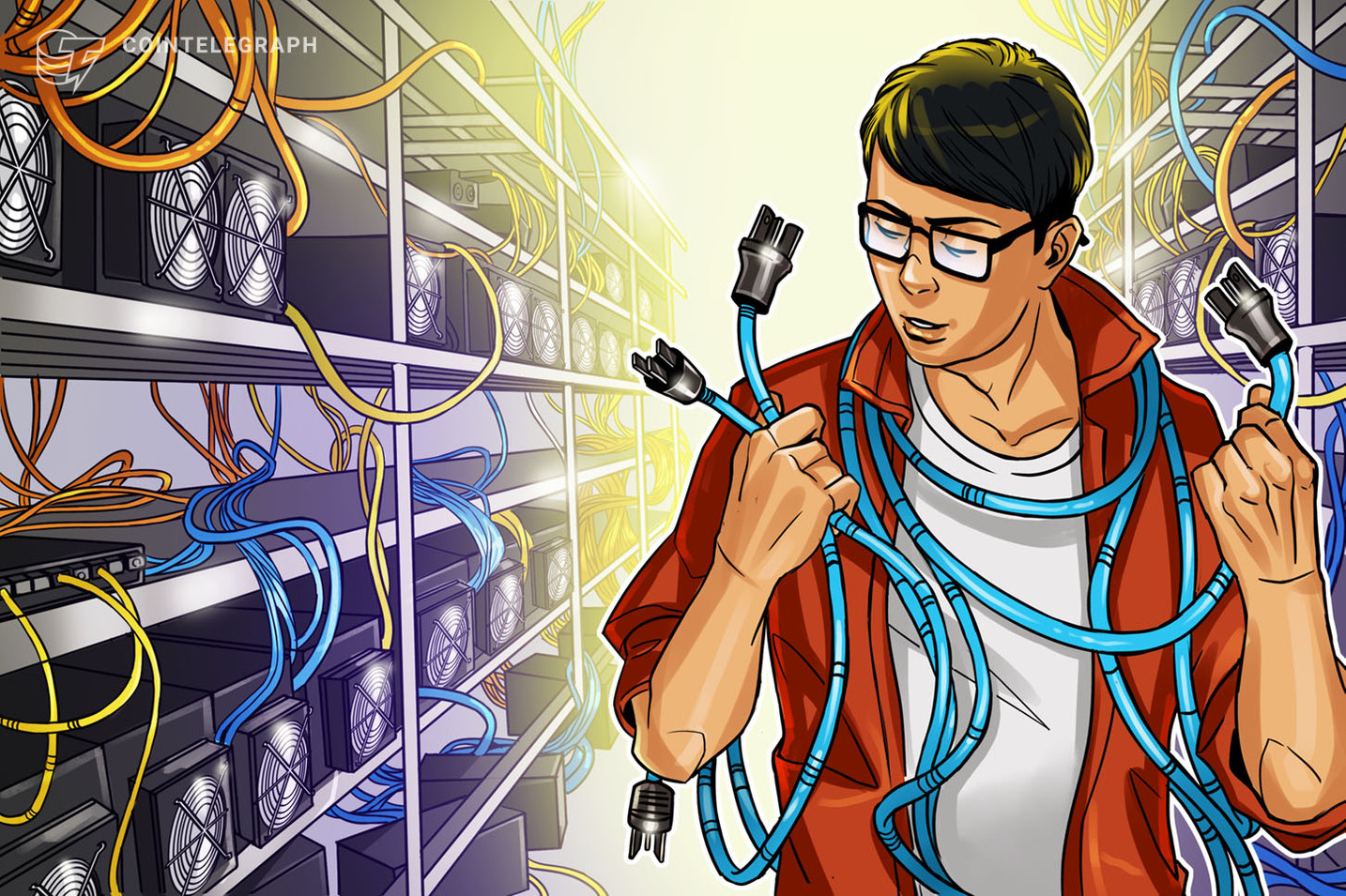
Following Beijing'southward crackdown on energy-sapping Bitcoin (BTC) mining, Guizhou province has become the land's first to brand use of its freed-upwards ability capacity to advance a climate-witting agenda.
The hydroelectric-rich southern province has recently announced a program to build at least 4,500 electrical vehicle (EV) charging stations in 2022. This will ramp upward to five,000 in 2022 and 5,500 the post-obit year.
As the South China Morning Postal service reported, Beijing's pressure on Bitcoin miners has freed up over 50 terawatt-hours of electricity — enough to sustain an industrialized city with a population of 1 million for 33 years or to fulfill the charging needs of 10 million Tesla Model 3s a year.
On the global stage, Prc has been an early on and decisive mover against crypto mining, forcing pools that had once profited from inexpensive, surfeit power to close up shop and relocate overseas. Provincial authorities in Guizhou are at present seizing upon that surfeit to incentivize the region's 38 million residents to adapt their habits in line with Beijing's decarbonization commitments. Cao Hua, a partner at the private equity firm Unity Asset Direction, told reporters that Guizhou's EV plan is "a double dose of good news for China'south economy":
"Cracking down on power-consuming Bitcoin mines and using the excess chapters to support development of the future of mobility is the best example of how China endeavours to reach its carbon neutrality goal."
Guizhou, one of the country's lowest per-capita income levels, aims to take installed 38,000 EV charging stations by 2023, with at least one in each town and 20% of motorcar park trophy at shopping malls reserved for EV charging points. Both local residents and manufacturers have told the South People's republic of china Morning Post that they await provincial authorities to offer incentives and consumer discounts to bolster uptake.
Upstream in the production line, one local EV battery supplier said that the industry is already taking its cue from the new agenda. "We are considering to co-operative out to those areas because they may roll out more than incentives to lure companies making products complying with their ecology policies," he said.
On a nationwide level, China has reportedly increased its number of public and privately endemic EV charging stations by over 47% in the past year. Withal the vast majority of the infrastructure remains concentrated in the most affluent cities and regions. The SCMP's report has claimed that the switch in capacity usage in quondam Bitcoin mining centers — amid them, Qinghai, Inner Mongolia, Xinjiang, Yunnan and Sichuan — could be a "game-changer" for the country'south drive to popularize EVs.
Related: Bitcoin hash charge per unit hits viii-month depression as Chinese miners power downwardly
Extending charging stations to rural and underdeveloped areas presents a significant claiming and is needed to fend off prospective EV drivers' "range feet" — i.e., how far they tin can travel without hitting a dead-end in terms of battery life. The pivot to EVs thus demands a coordinated effort from provincial governments, carmakers and battery manufacturers to sufficiently ramp up investment and product levels at scale. Now, Beijing is aiming for iii in v vehicles in the country to exist powered by non-fossil fuels by 2030, as compared with the United States' 50% target.
Aside from climate grounds, several governments worldwide have toughened their stance on Bitcoin mining this year, citing concerns over its bear upon on local energy provision. In tardily April, a former Kyrgyz government official argued that crypto mining was a major commuter of the land'due south energy crisis. Licensed Iranian miners take been banned from operating in the state until September in a bid to conserve power during the summer months.

Source: https://cointelegraph.com/news/bitcoin-mining-ban-in-china-a-game-changer-for-electric-vehicle-adoption
Posted by: mirandaheally1992.blogspot.com
0 Response to "Bitcoin mining ban in China a ‘game changer’ for electric vehicle adoption"
Post a Comment